
About LunaRock
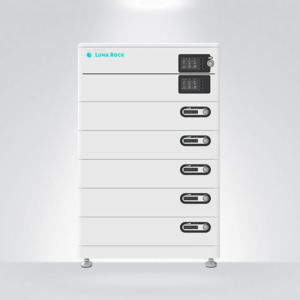
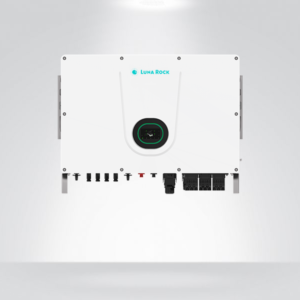
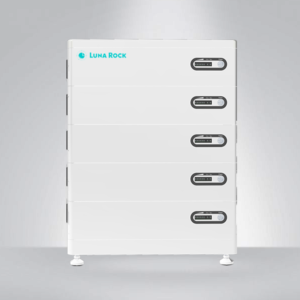
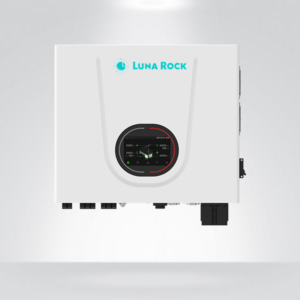
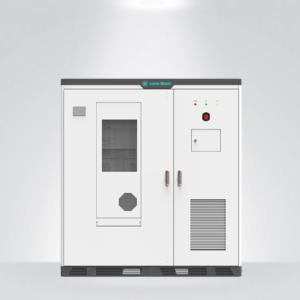
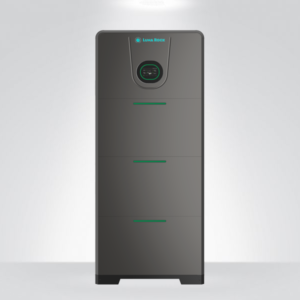
Guangzhou LunaRock Tech Co., Ltd. is a residential and C&I energy storage solutions provider. We empower users worldwide to achieve true energy freedom. Core products: - Residential Storage (5kWh-30kWh): Compatible with rooftop solar, supporting grid-tied/off-grid modes. - C&I Storage (100 kWh - 2 MWh+): Customized for factories, malls, data centers; for peak shaving, backup power, etc. - Core Components: LiFePO4 battery packs, integrated PCS, energy management platform, solar inverters. Our Mission: Make clean and reliable energy accessible anytime, anywhere. Our Vision: To become the most trusted brand in global portable green power solutions.
About LunaRock
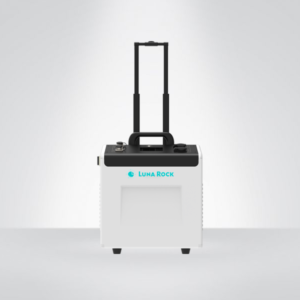
Guangzhou Luna Rock Tech Co., Ltd. is a global technology company specializing in portable green energy solutions.
News
FAQ
The core differences lie in capacity scale, application entities, and functional positioning. C&I energy storage typically has a capacity ranging from 100kWh to 10MWh, targeting industrial and commercial entities such as factories, office buildings, and supermarkets. Its core functions include peak-valley electricity price arbitrage, demand management, emergency backup power, and participation in grid demand response. Residential energy storage generally has a capacity of 5–30kWh, targeting household users. It is mainly used with photovoltaic (PV) systems to achieve self-consumption of self-generated electricity, surplus electricity storage, and emergency power supply in case of household power outages.
Basic conditions for installing residential energy storage: ① Own a residential property with legal ownership; ② If paired with PV, have PV installation conditions (qualified roof load-bearing capacity and sufficient sunlight); ③ Meet the grid access requirements of the local power department.
For some countries, the grid-connection process is not overly complicated. The steps are: Submit an application (to the local power supply company) → On-site survey → Scheme design and equipment installation → Grid-connection acceptance → Sign a power purchase and sale agreement → Grid-connected operation. In most regions, the process can be completed within 1–2 months.
Note on Regional Procedures: While the standard grid-connection process is consistent, many regions now implement a filing system (record-filing) for residential storage to simplify entry. Furthermore, beyond direct financial subsidies , the optimization of Time-of-Use (ToU) electricity price mechanisms (such as widening peak-valley price spreads) is becoming a more critical driver for C&I storage profitability than one-time grants.
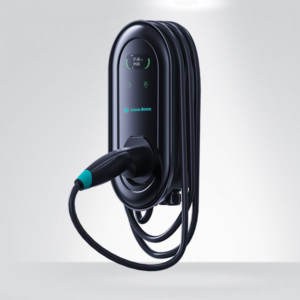
Charging piles are mainly divided into three types based on power and scenarios: ① AC slow charging piles (power 3.5–7kW), suitable for supplementary energy during long-term parking; ② DC fast charging piles (power 30–240kW), with fast energy supplement speed; ③ Ultra-fast charging piles (power ≥480kW), suitable for high-end new energy vehicles.
For households, prioritize a7kW AC slow charging pile, which has low installation cost and low requirements on grid load. For commercial scenarios (such as charging stations and business districts), DC fast/ultra-fast charging piles are needed to meet users’ fast energy supplement needs and improve operational efficiency.
The cycle life of mainstream lithium-ion energy storage batteries (lithium iron phosphate) is about 6,000–10,000 cycles (The actual lifespan is affected by the depth of charge and discharge (DoD) and temperature control management), and the normal service life is 8–15 years (C&I energy storage has a slightly shorter life than residential energy storage due to higher charge-discharge frequency).
When batteries expire, they need to undergo second-life utilization + recycling and dismantling: Batteries with capacity degraded to below 80% can be used in second-life scenarios such as low-speed electric vehicles and backup power supplies; completely scrapped batteries are dismantled and recycled by professional institutions for cathode, anode, electrolyte and other materials to achieve resource recycling.
Yes. According to relevant regulations, installing a household charging pile requires submitting an application to the property management, which needs to cooperate in issuing a consent for installation certificate (to confirm the parking space ownership and whether the grid load is sufficient).
If the property refuses without reasonable reasons, you can complain and coordinate with the local housing and urban-rural development department or power supply company; some regions have issued policies clearly stating that the property shall not unreasonably obstruct the installation of charging piles.
The investment payback period for C&I energy storage projects is usually 5–8 years, depending on the local peak-valley electricity price difference, subsidy policies, and project utilization rate, please note the regional differences.
Main profit points: ① Peak-valley electricity price arbitrage (charging at low valleys and discharging at peaks to earn the price difference); ② Demand charge management (reducing the enterprise’s maximum demand to reduce electricity expenses); ③ Participating in grid demand response (providing peak shaving and frequency modulation services for the grid to obtain subsidies); ④ Emergency backup power services (charging for high-reliability electricity enterprises for backup power supply).
Yes, but protective measures need to be taken. Regular energy storage products have passed high and low temperature tests (the operating temperature range is usually -20℃~55℃). For extreme high temperatures, cooling fans or air conditioners need to be equipped; for extreme low temperatures, the Battery Management System (BMS) will start the preheating function; in typhoon-prone areas, outdoor installations need to be fixed with anti-typhoon brackets to ensure structural stability.
Advanced Safety Measures: In addition to environmental protections against extreme weather, modern systems focus on thermal runaway prevention. High-quality installations now incorporate cell-level monitoring via the BMS and automatic fire suppression systems using agents like Perfluoro(2-methyl-3-pentanone) to ensure active safety in C&I and residential environments.
Most residential energy storage systems are designed for grid-connected use (paired with PV to achieve self-consumption and surplus electricity grid-connection). They can also operate off-grid independently when there is a power outage, but additional off-grid inverters need to be configured.
It should be noted that grid-connected energy storage systems must comply with local grid regulations and cannot arbitrarily disconnect from the grid for operation to avoid affecting grid stability.
Main operating costs include: ① Electricity costs (the largest proportion, related to the local electricity price and charging volume); ② Equipment maintenance costs (regular inspection, component replacement, etc.); ③ Site rent and labor costs; ④ Network and management system costs.
Cost control methods: ① Sign a preferential electricity price agreement with the power supply company; ② Improve the utilization rate of charging piles (through location selection, promotion, etc.); ③ Adopt intelligent management systems to reduce manual costs; ④ Do a good job in daily maintenance to extend the service life of equipment.
Yes, but the subsidy policies vary by region and period. For C&I energy storage, some regions provide investment subsidies, demand response subsidies, or tax incentives; for residential energy storage, subsidies are usually linked to PV supporting installations, such as per-kWh electricity subsidies or one-time installation subsidies.
For charging piles, many regions offer installation subsidies (especially for public and rural charging piles) and operating subsidies. It is recommended to consult the local development and reform commission, energy bureau, or power supply company for the latest subsidy policies.
In addition to monetary subsidies, attention should also be paid to the “adjustment of time-of-use electricity pricing mechanism”, as the expansion of peak-valley price differences caused by policies has a much greater impact on the revenue of C&I energy storage than direct subsidies

Products
Hybrid Storage System
Contact Us
- Tel: +86 20 2890 9987
- Phone/WhatsApp/WeChat: +8618620128542
- Email:cocoa.gxj@gmail.com
- Address:C759,Room 805, No. 666, Middle Huangpu Avenue, Tianhe District, Guangzhou City, China.